

Climate Insurance Disruption Is Becoming a Financial Systems Problem
Risk Infrastructure Group analyzes how climate-driven insurance instability propagates across housing finance, public recovery systems, municipal balance sheets, and capital markets.
Observation
Climate-driven disasters are no longer isolated shocks. They are structurally disrupting property insurance markets — reducing coverage availability, concentrating risk, and accelerating insurer withdrawal from high-exposure regions.
Systemic Implication
These disruptions do not remain contained within insurance markets. They propagate across mortgage finance, federal disaster recovery systems, municipal fiscal stability, and reinsurance capital markets — creating systemic effects that remain under-analyzed.
Our Analysis
Risk Infrastructure Group analyzes how climate-driven insurance disruption transmits through financial systems. We focus on the interdependencies between insurance markets, housing finance, public-sector balance sheets, and capital markets.
Our work supports insurers, reinsurers, financial institutions, municipal governments, federal policymakers, and the research community in understanding emerging systemic risk.
Forward Outlook
We examine how resilience investment, mitigation verification, and risk-governance frameworks may shape long-term insurability, capital allocation, and financial system stability.
An emerging challenge for markets and institutions is how to translate resilience and mitigation into signals that are credible across insurance, finance, and public-sector decision environments.
Grounded in Recovery. Focused on Systems.
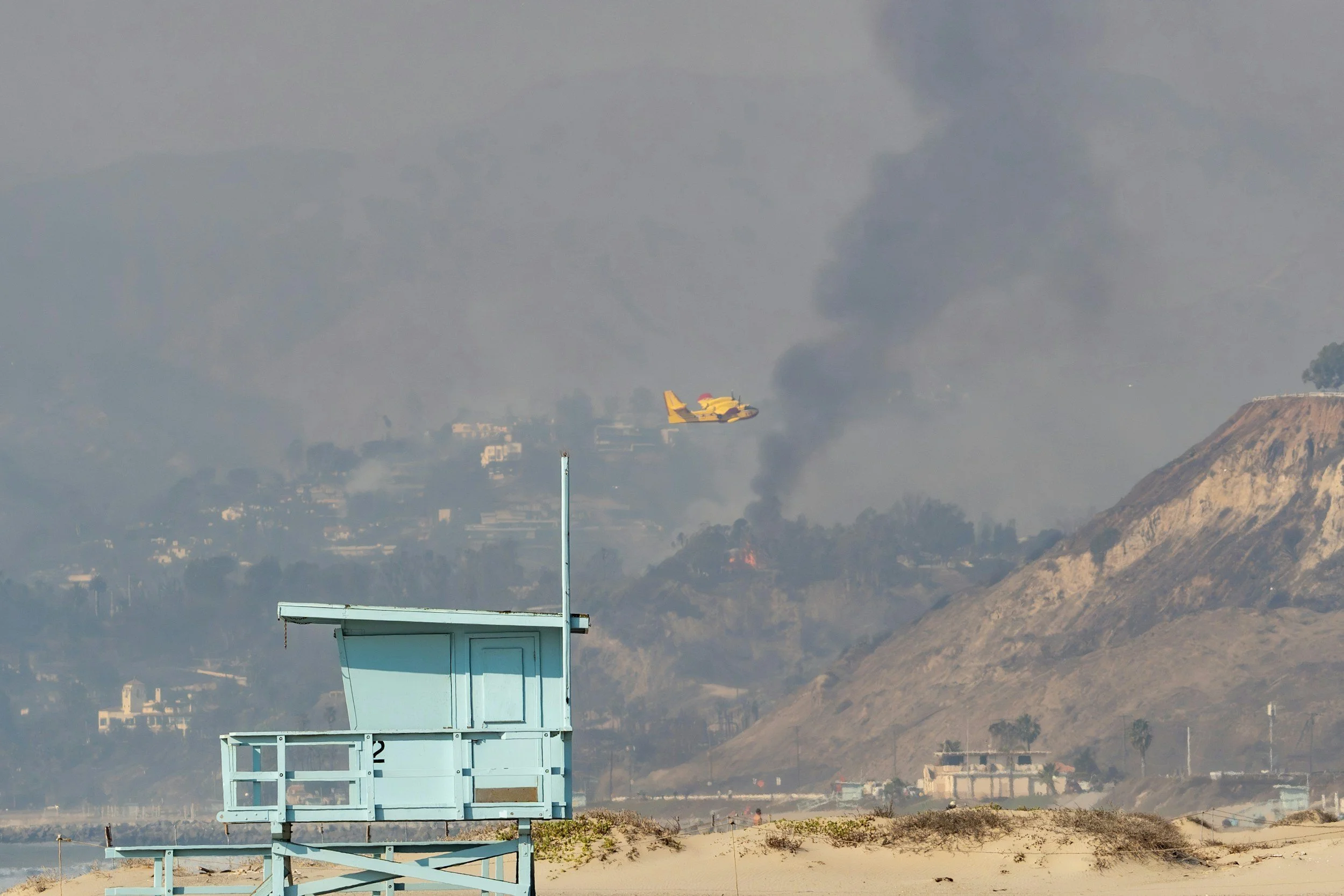
RIG's research draws on direct operational involvement in the recovery process following the 2025 Pacific Palisades wildfire — one of the most financially complex disaster events in California's history.
That experience exposed how a single catastrophic event can stress multiple financial systems simultaneously: insurance claims resolution, mortgage servicing, federal assistance programs, and reinsurance capital allocation. Understanding how these systems interact — and where they fail — is central to RIG's research agenda.
Research Focus
RIG examines climate-driven financial disruption across four interconnected domains.
-
Property insurance availability and affordability are deteriorating in climate-exposed regions. RIG examines insurer portfolio dynamics, market withdrawal patterns, and the conditions under which private insurance markets become structurally unavailable.
-
Disasters affect more than physical structures. RIG studies how catastrophic events disrupt mortgage servicing, constrain rebuilding capital, and reduce housing market liquidity in recovering communities — with consequences that extend well beyond the disaster perimeter.
-
FEMA assistance, SBA disaster lending, and private insurance claims resolution operate as interdependent systems. RIG analyzes how these programs interact, where gaps emerge, and how their design shapes rebuilding timelines and community recovery outcomes.
-
Catastrophe reinsurance plays a foundational role in sustaining primary insurance markets. RIG examines how correlated climate exposures, risk aggregation, and capital allocation dynamics in reinsurance markets affect the long-term stability of insurance availability.
Risk Infrastructure Group is an independent research and advisory platform. Our work examines how climate-driven disasters propagate through interconnected financial systems — with implications for insurers, housing markets, federal recovery programs, and reinsurance capital markets.
The platform was established following direct operational involvement in recovery efforts after the 2025 Pacific Palisades wildfire.
Contact
Risk Infrastructure Group welcomes inquiries from researchers, insurers, reinsurers, housing finance institutions, federal agencies, and philanthropic foundations examining the financial system implications of climate-driven disasters.